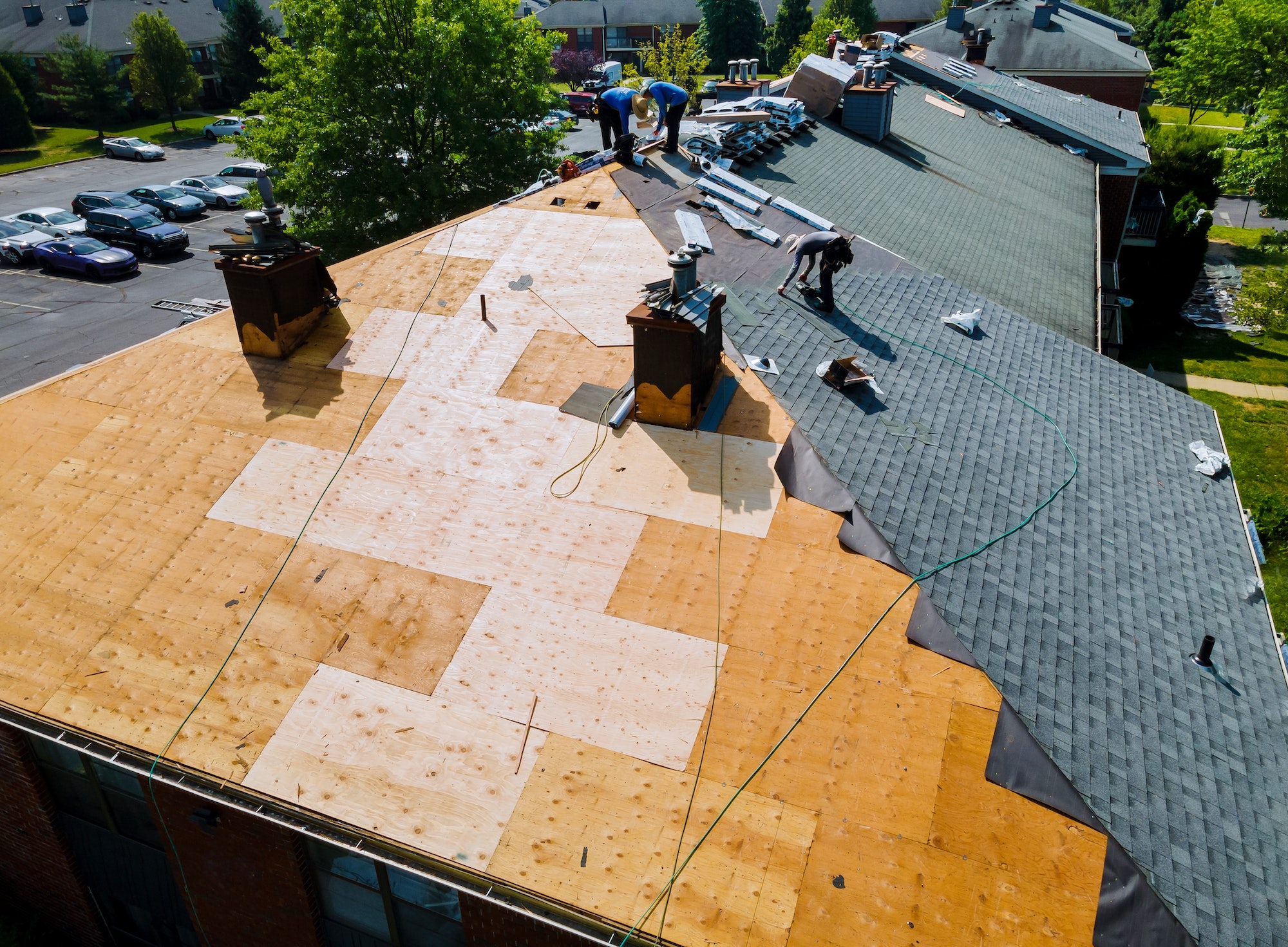
How old is the roof? It’s one of the first questions property owners ask when replacement enters the conversation. Age is useful information, but it is only one data point. Two roofs of similar age can have very different repair histories, exposure, drainage conditions, maintenance records, substrates, and levels of deterioration.
A better Roof Replacement decision starts by building a condition profile. Instead of asking whether the roof has reached an arbitrary birthday, document what the roofing system is doing now, where problems are occurring, and how extensive those conditions have become.
That changes replacement from a reaction to a leak into an evidence-based building decision.
Roof age = 1 data point.
A replacement assessment should also consider roof type, area, repair history, leak patterns, drainage, flashing, penetrations, substrate or deck condition, and moisture-related findings where investigated.
Roof Replacement Starts With Condition Data, Not a Birthday
The first useful number is roof area because it establishes the physical scale of the asset. But square footage alone says nothing about condition. A large roof with a few isolated repair areas can present a different decision from a smaller roof with widespread deficiencies.
Repair frequency provides another data set. Record when repairs occurred, where they were performed, what conditions they addressed, and whether the same symptoms returned. Mapping those locations can reveal whether problems remain concentrated or are spreading across unrelated areas.
Then add the roof’s physical details. How many drains and scuppers serve the roof? Where are the equipment curbs and penetrations? Which flashing conditions have required previous work? Are certain traffic paths repeatedly associated with damage?
Moisture-related information can be especially important when conditions justify investigation. The objective isn’t simply to label a roof “wet” or “dry.” It is to understand whether identified concerns are localized enough for corrective work or broad enough to affect the replacement decision.
• 1 roof may contain many penetrations, transitions, drains, and repair histories.
• 1 interior leak does not automatically identify a single roof entry point.
• 100% of the replacement decision should not depend on roof age alone. Condition evidence should drive the recommendation.
When Repair Data Starts Pointing Toward Replacement
No credible rule says that a specific number of repairs automatically means a roof must be replaced. The more useful metric is the pattern those repairs create.
If two service calls address the same isolated flashing detail and the surrounding roof remains serviceable, targeted repair may still make sense. If repairs are appearing across multiple unrelated roof areas while deterioration and moisture concerns are also expanding, replacement deserves a broader evaluation.
| Data Point | Repair May Still Fit | Replacement Deserves Evaluation |
|---|---|---|
| Leak pattern | Isolated and diagnosable | Repeated across multiple areas |
| Repair locations | Few and stable | Increasing or widely distributed |
| Moisture concerns | None identified or localized | Broader findings require evaluation |
| Roof surface | Predominantly serviceable | Widespread deterioration |
| Deck/substrate concerns | Localized | Extensive or recurring |
| Flashing deficiencies | Specific details | Multiple systems or broad areas |
The table isn’t a replacement calculator. Instead, it organizes evidence. A property owner can use it to distinguish a roof that continues to experience manageable localized deficiencies from one where the pattern itself is changing.
Track at least 4 repair variables: date, location, defect type, and outcome.
Add 2 spatial questions: Are problems repeating in the same location? Are new problems appearing elsewhere?
The objective is 1 trend line: localized, stable problems versus expanding system-wide concerns.
What Changes When the Existing Roof Is Removed?
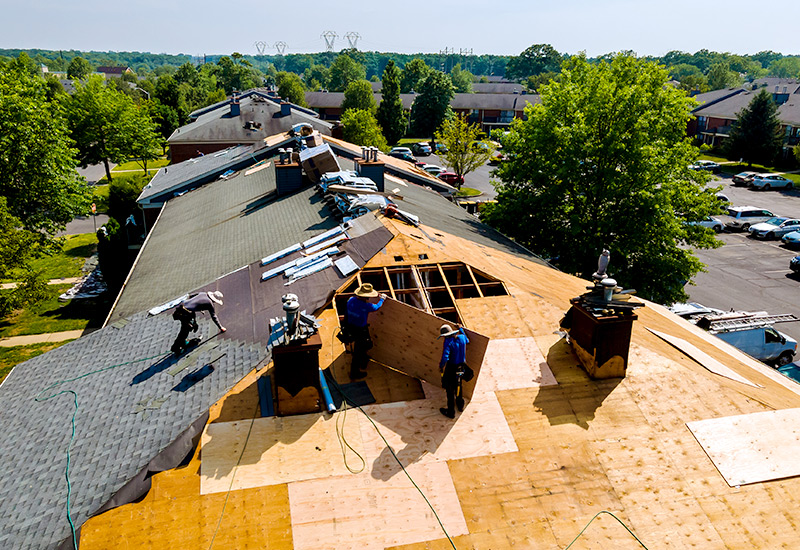
Replacement provides something localized repair cannot: broader access to the roof assembly. Once specified materials are removed, conditions that were previously concealed can become directly observable.
The deck or substrate is one example. Areas that appeared acceptable from the finished surface may require corrective work once exposed. Insulation configuration can also be documented more completely where it forms part of the assembly, while moisture-affected or deteriorated materials can be identified according to actual field conditions.
Replacement also creates an opportunity to reconsider how components work together. Flashing transitions, penetrations, insulation, drainage interfaces, attachment methods, and the primary roofing material can be integrated within a new project scope rather than treated as separate generations of repairs.
| Assembly Data | Before Removal | During Replacement |
|---|---|---|
| Deck condition | Partially inferred from accessible evidence | Broader direct access as work proceeds |
| Existing insulation | Known from records or limited investigation | Configuration can be documented as exposed |
| Concealed deterioration | May remain uncertain | Can be evaluated where opened |
| Flashing interfaces | Existing conditions | Can be integrated into new system scope |
7+ condition categories: roof surface, repairs, leaks, flashing, penetrations, drainage, substrate/deck, plus moisture findings where applicable.
3 assembly levels to consider: primary roofing system, insulation or intermediate components where present, and deck/substrate.
1 integrated decision: determine whether continued repair, restoration, or replacement best fits documented conditions.
The value of replacement, therefore, isn’t simply that everything looks new afterward. It is the opportunity to move from an aging collection of known and unknown conditions toward a documented roofing assembly with defined materials, details, and installation requirements.
How Roof System Selection Changes the Numbers
Once replacement is justified by the condition data, the next question is not simply, “Which roof is best?” A useful comparison starts with measurable specifications and the demands of the building. Different roofing systems organize those variables differently.
For low-slope commercial properties, TPO, PVC, EPDM, and built-up roofing may enter the discussion depending on project requirements. Steeper roof configurations may involve asphalt shingles, tile, or other systems. The correct comparison should consider the complete assembly rather than the surface material alone.
| Roofing System | Common Roof Context | Useful Specification Data |
|---|---|---|
| TPO | Low-slope roofing | Membrane thickness, reinforcement, attachment, reflectance data |
| PVC | Low-slope roofing | Membrane thickness, reinforcement, attachment, system compatibility |
| EPDM | Low-slope roofing | Membrane thickness, attachment method, seam/detail requirements |
| Built-Up Roofing | Low-slope roofing | Ply configuration, reinforcement, surfacing, flashing details |
| Tile | Typically sloped applications | Tile type, weight, underlayment, attachment, flashing |
| Asphalt Shingles | Sloped roofing | Product specification, underlayment, slope, fastening requirements |
Notice what is missing from the table: a universal winner. System selection depends on roof geometry, building use, structural considerations, drainage, insulation objectives, exposure, manufacturer requirements, applicable codes, and project-specific design criteria.
FACT BOX: COMPARE SPECIFICATIONS, NOT LABELS
Two proposals can both say “TPO roof” while specifying different membrane thicknesses, insulation assemblies, attachment methods, flashing scopes, and accessory components. The system name alone is not enough data for a meaningful comparison.
Lake Tahoe Changes the Roof Replacement Data Set
For a property owner choosing a Roof Replacement Contractor in Lake Tahoe, location adds another group of variables to the replacement decision. A roofing system has to be considered in relation to the building’s actual site conditions rather than a generic California climate description.
Snow-related design requirements are an obvious consideration, but they should not be reduced to one regional number. Applicable criteria can depend on project location, elevation, building characteristics, roof configuration, and governing requirements. Structural design questions should be resolved using the requirements applicable to the specific building.
Roof slope and drainage also deserve close attention. Snow, meltwater, freeze-thaw conditions, valleys, transitions, penetrations, and drainage pathways can interact in ways that make detailing particularly important. The objective is not simply to select a material described as suitable for cold weather; it is to design and install the complete assembly for the conditions it will encounter.
Insulation and ventilation considerations may also affect the project depending on roof type and building design. These components should be evaluated as parts of the assembly rather than as isolated upgrades.
FACT BOX: SNOW DESIGN IS PROJECT-SPECIFIC
A generic “Lake Tahoe snow load” should not be substituted for project-specific design criteria. Applicable requirements depend on the building and location. Use the governing project, structural, and code requirements rather than an invented regional average.
LAKE TAHOE DATA CHECK
Evaluate at least 6 site and assembly variables: roof geometry, applicable structural criteria, drainage, penetrations, flashing, and insulation/ventilation conditions where relevant.
Add project-specific exposure and code requirements before final system selection.
The Metrics That Matter During Installation
Data shouldn’t disappear once construction begins. In many ways, installation is where specifications become measurable field conditions.
Roof area and material quantities can be documented. Membrane thickness or product specification can be confirmed where applicable. Insulation type and thickness can be recorded. Attachment requirements, flashing scope, deck repairs, penetration details, and drainage conditions can become part of project documentation.
Photographs add another useful layer. They can record substrate conditions as areas are opened, repairs before they are covered, flashing details during construction, and the finished roof condition. That creates a reference point for future inspections.
| Useful Metric | Weak Substitute |
|---|---|
| Specified membrane thickness | “Heavy-duty membrane” |
| Defined insulation specification | “Energy-efficient roof” |
| Documented attachment method | “Extra secure” |
| Product reflectance data where relevant | “Cool roof” |
| Written flashing scope | “All details included” |
| Inspection and photo documentation | “Quality guaranteed” without supporting detail |
STATISTICAL SUMMARY: INSTALLATION RECORD
4 measurable categories: materials, dimensions/specifications, installation details, and existing-condition repairs.
2 documentation formats: written records + photographs.
1 objective: establish what was installed and create a baseline for future roof management.
From Data to a Replacement Decision
The strongest replacement decisions aren’t built around a dramatic leak, a vague description such as “old roof,” or one manufacturer’s product brochure. They are built by combining condition data with a clearly defined replacement specification.
Before moving forward, a property owner should be able to check the following:
✓ Existing roofing system documented
✓ Roof area and major details identified
✓ Repair history mapped and reviewed
✓ Leak patterns evaluated
✓ Moisture concerns investigated where appropriate
✓ Deck or substrate condition considered
✓ Drainage and flashing reviewed
✓ Replacement system clearly specified
✓ Installation metrics defined
✓ Final documentation and maintenance baseline planned
No individual checkmark automatically means “replace.” Together, however, these categories create a much stronger basis for comparing repair, restoration, and replacement.
That is especially important when proposals differ. Instead of comparing only bottom-line prices, compare what each contractor is actually proposing to remove, preserve, repair, install, inspect, and document.
Roof age is one number. Roof replacement is a system decision.
The strongest decision is based on enough documented evidence to understand what has failed, what remains serviceable, what conditions may be concealed, and what the new roof needs to accomplish for the specific building.